
What’s Happening in National Security, Technology, Defense & Maritime
Vol. 3, Issue 26
To stay up to date on what AGS is doing, follow us on LinkedIn

AGS UPDATES
- AGS Chairman Ambassador Robert C. O’Brien delivered the keynote address at the 2024 NDIA Logistics Forum in Oklahoma City, OK. O’Brien spoke about the importance of a robust U.S. defense industrial base to address global threats.Read his full remarks below:
America Needs an Industrial Base fit for this Century
The National Defense Industrial Association is doing an important service by bringing together companies and individuals who are all critical to strengthening America’s industrial backbone. America’s industrial capacity is the keystone of our overall national power. Indeed, our economic and national security is assured by a robust and reliable industrial base.
The world we live in today looks very different than the one we knew just three short years ago when President Trump was in office. I was asked by Martha McCullum on her show last week to comment on Secretary of State Tony Blinken’s statement that the Middle East was the most dangerous it has been since1973. I responded that the world has not been this dangerous since 1938.
On October 7, we saw innocent Israeli’s face the worst imaginable kinds of barbarism. Our prayers are with them, as they seek to wipe out the Hamas terrorists who assaulted the Holy Land. Now, Iran through its terrorist proxies is killing American troops and firing missiles on civilian ships and doing so with relative impunity. In the past month, we have lost valiant soldiers and SEALs unnecessarily, because US deterrence has failed. The North Korean regime persists in threatening our Korean and Japanese allies, and the wider Pacific. Russia’s war of conquest in Ukraine is unprecedented in four generations. For the past two years now, Ukrainians have fought bravely and relentlessly for their sovereignty using grit and American and European weapons and ammunition to hold the invaders at bay. Russia was, no doubt, encouraged in its course by America’s humiliating withdrawal from Afghanistan.
Communist China, the most powerful adversary the United States has faced in its history is plotting and growing its military might. While America squandered its post-Cold War “peace dividend” and focused on the global war on terror and ill-fated nation building over the past three decades, China built the world’s largest military and the CCP spun a web of malign activities. All of her toil is designed to undermine free nations and to put China solely atop the international community. It will seek to take democratic Taiwan by force and coercion next. The threat we face from China is not only military in nature. This is a clash that involves the whole of our societies. We must employ all instruments that make up national power -military, diplomatic, political, economic, trade, and our industrial base – to prevail. China is certainly doing so. At this moment, it is not clear that our nation’s industrial base is up to the challenge posed by China, Russia, Iran and other bad actors.
Our defense industrial base has shrunk to its lowest point since before World War II. The number of important defense players, large and small, that have vanished since the “last supper” is alarming. Washington has always assumed that, as was the case in 1941, if a major conflict arose, our industrial base could refit and ramp up in short order, bringing war material to the front in a matter of weeks or months. As the difficulty we see now in simultaneously resupplying Ukraine, Israel and Taiwan shows, America lacks the ability to surge military hardware and ammunition in sufficient quantities in a major crisis. The infrastructure, workforce, manufacturing capability, and policies that made such a surge possible in the past, simply no longer exist today.
Moreover, our adversaries have carefully studied our way of war in the past century and have planned accordingly to attempt to realize their military objectives before an effective industrial response by the United States could be mustered. In the 21st century, defense production is far more complex than just forging steel and producing explosive ordinance. In order to build the tools our warfighters need, our industries need jet engines, turbine engines, computers and chips, complex alloys, and countless other critical technologies, and components. These items come from long and vulnerable supply chains. Too often, these supply chains run straight through China, our chief adversary and competitor. Thus, we have imperiled our ability to obtain key goods and products in war time. A prime example of this situation is how Beijing has established itself as a dominant force controlling the world’s critical minerals and rare earth elements. Even when these elements are mined in California or elsewhere, the ore is shipped to China for processing because we no longer have the capacity to do it ourselves. These minerals are important in all aspects of civilian and military high tech manufacturing.
The first step to solving this problem is acknowledging we face a big one. As I noted a few moments ago, Washington appears to be slowly waking up from years of inaction and is starting to craft a national defense industrial strategy. The Chips Act was one such measure. Much more on the policy and appropriations fronts must be done – quickly and in a bipartisan fashion. Rebuilding a defense manufacturing industrial base will require both hard work at home and unprecedented cooperation from our allies and partners around the world. Reshoring, nearshoring and friendshoring will be required of a 21stcentury industrial base that is prepared for a 21st century conflict. China is simply too big for America to confront alone.
One example of how we can achieve this level of industrial cooperation is seen in the AUKUS agreement. Combining decades of knowhow with the sharing of infrastructure by three Anglosphere allies is a winning strategy to reinvigorate the defense industrial bases of all three nations. To counter the threat China poses requires more than the US and its allies rebuilding their manufacturing supply chains. It means stopping the PRC’s intellectual property theft, cyber-attacks and espionage, unfair trade practices and currency manipulation, all of which has allowed Beijing to turbo charge its industrial growth, while stunting ours.
I have full confidence that America can and will meet these challenges. With strong leadership in Washington that is committed to American greatness and not satisfied to merely manage our decline, we can still win. But this is not just a government issue. America must have strong leadership in the private sector if the good guys and gals are going to prevail over the tyrants, party bosses, ayatollahs and thugs around the world. I am so heartened because in this room, I see dedicated men and women, who are as committed as any past generation tore building America’s industrial might.
Thank you. May God bless you. And, may God bless the United States of America.
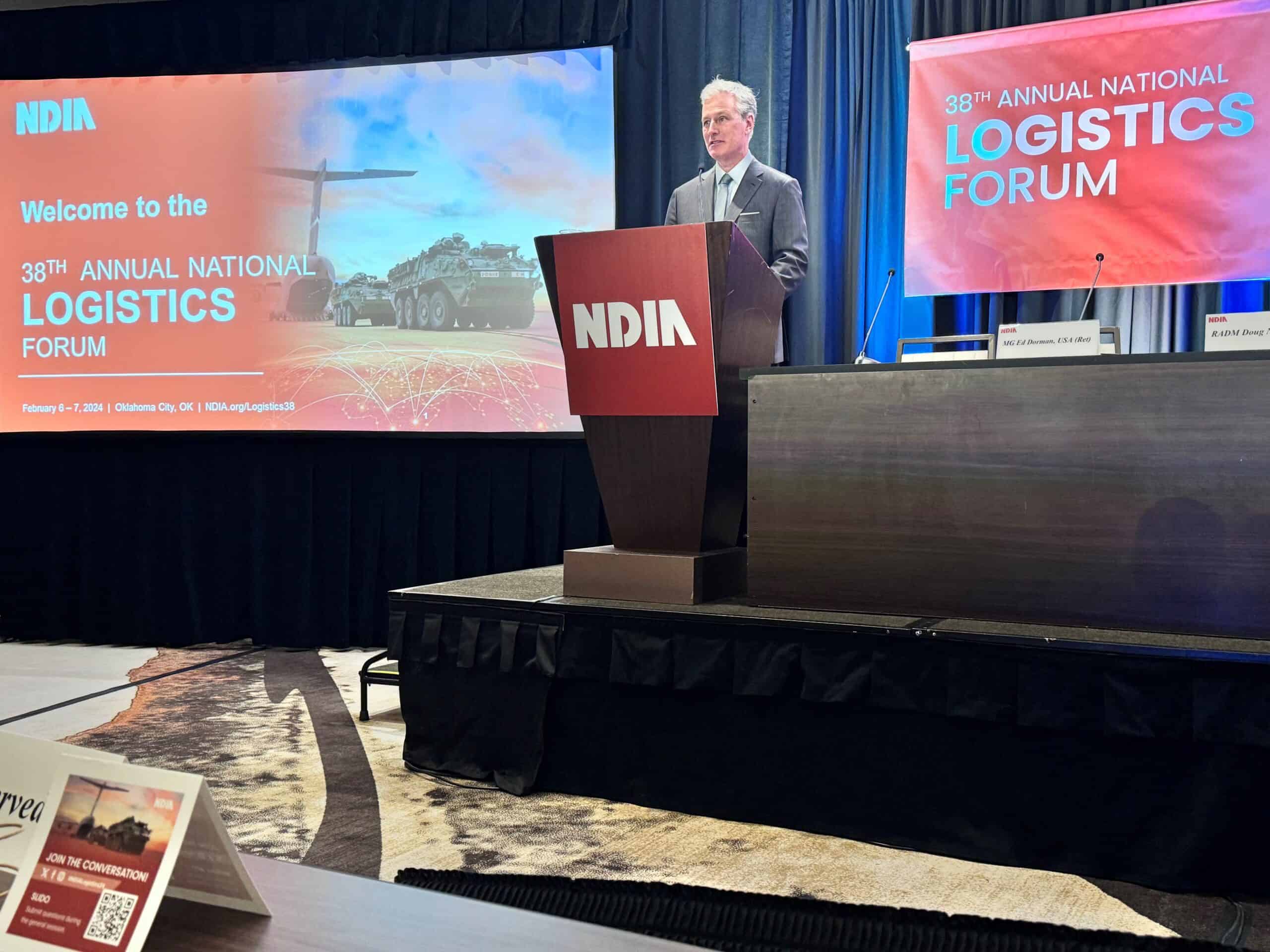
- AGS CEO Alexander Gray moderated a panel at the NDIA forum on military sustainment.
- Gray addressed the Phoenix Council on Foreign Relations on the importance of a revamped U.S. defense industrial base for Great Power competition.
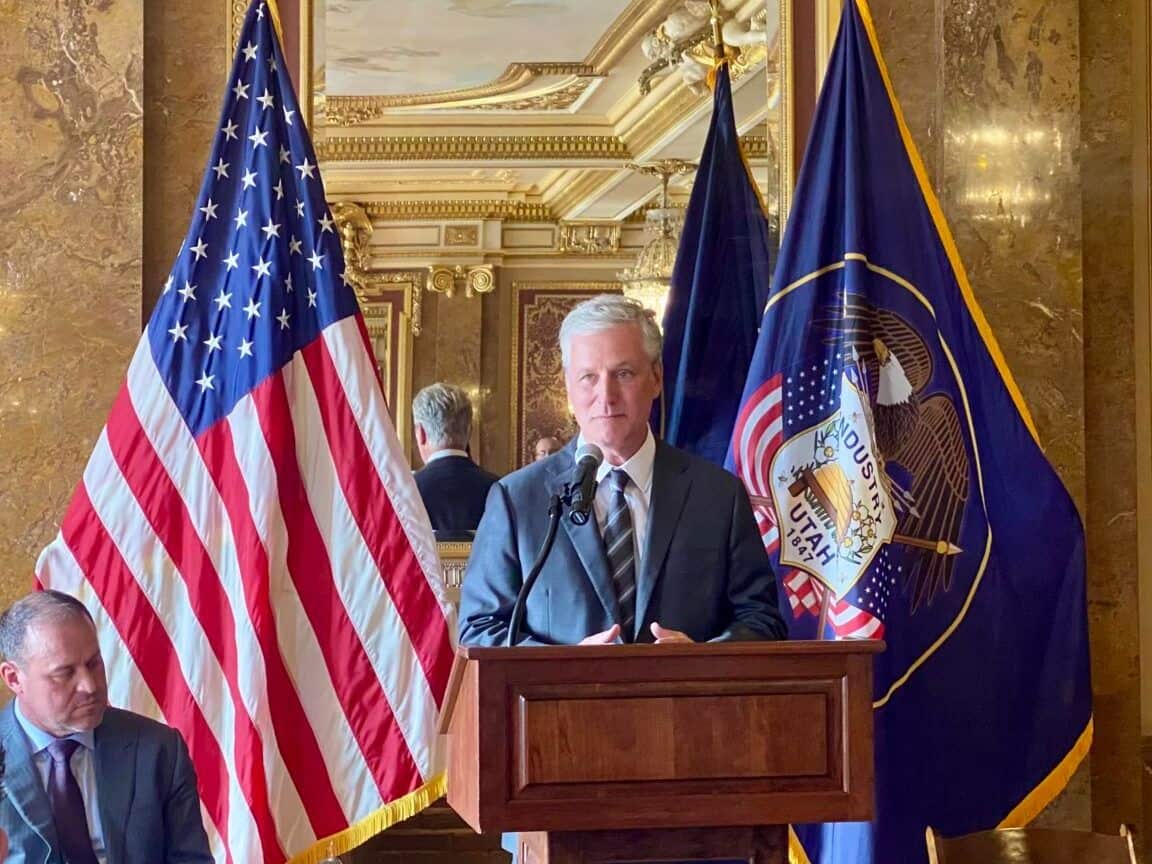
- O’Brien spoke at the Utah State Capitol about the national security issues at the state and local level.

- Gray testified before the Kansas and Nebraska state legislatures about how state government can act to counter the threats posed by the CCP in their state.
- O’Brien spoke to the Oklahoma City Republican Women’s Club about his experience in the Trump Administration.

- Gray has joined the Board of Directors of Citizen Capital in Oklahoma City
- AGS Chief of Staff Madeleine Westerhout has been selected for the Aspen Strategy Group Rising Leaders Program Class of 2024
WHAT WE ARE SAYING
- O’Brien spoke at a CCIA discussion titled The Global Race for AI Dominance
- O’Brien joined Marth MacCallum on Fox News to discuss Iranian proxy attacks on U.S. troops, saying, This is the ‘most dangerous time for the world since 1938’
- Prime Minister Scott Morrison spoke with with the One Decision Podcast to discuss the AUKUS agreement and how the trilateral pact will counter Indo-Pacific threats.

- O’Brien joined Newsmax to discuss the situation in the Middle East and the need to project American strength to protect U.S. forces.
- Gray was quoted in Voice of America discussing the importance of Congress funding the Compacts of Free Association agreement with Pacific Island nations.
- Gray was quoted in the Daily Caller discussing the 2025 defense budget and the need to prioritize threats in the Indo-Pacific.
- O’Brien’s national security remarks at the Utah State Capitol on were discussed in the Utah News Dispatch.
WHAT WE ARE READING
Maritime
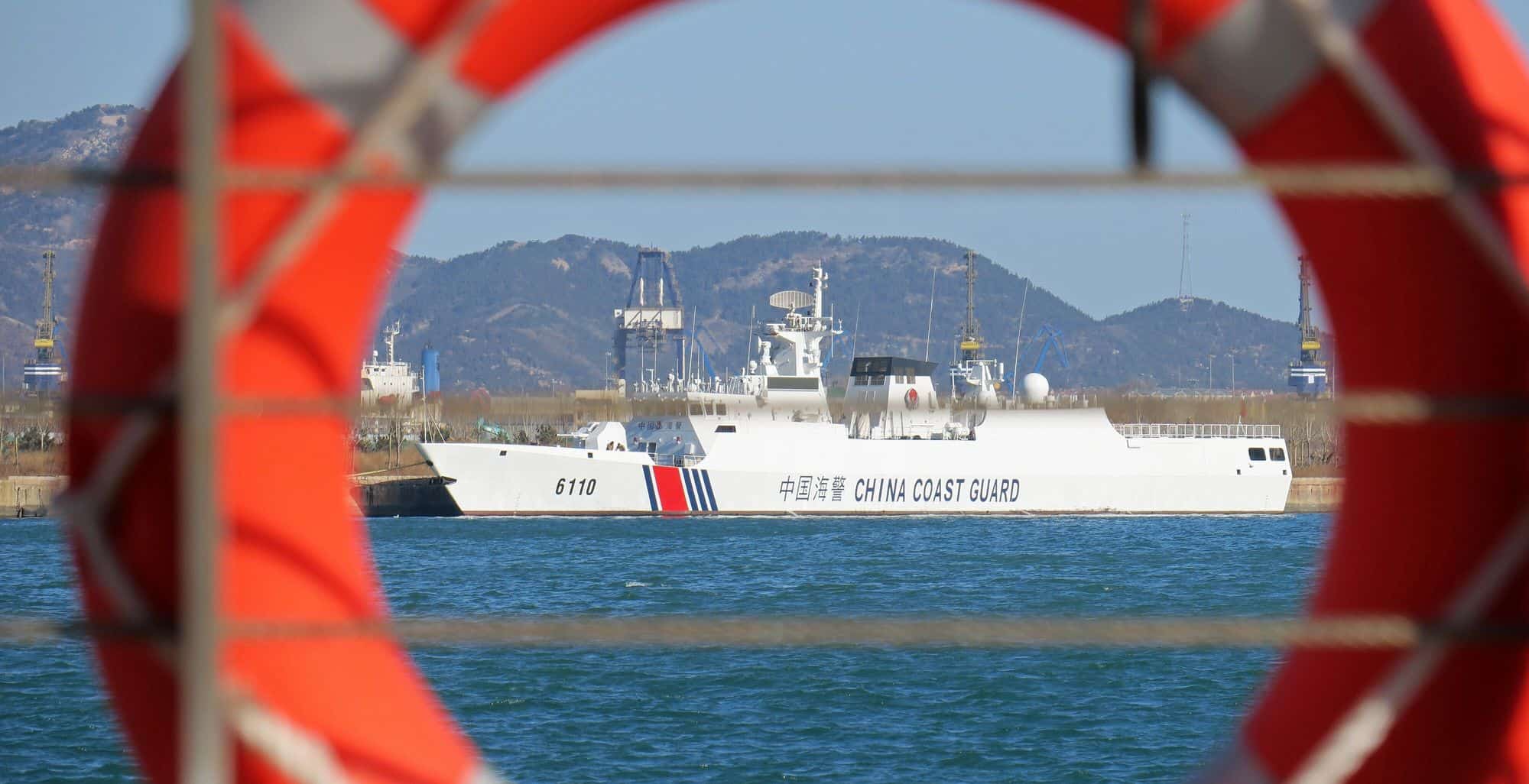
- The Wall Street Journal: China’s Shipyards Are Ready for a Protracted War. America’s Aren’t.
- Freight Waves: Global trade receding? Tell that to shipbuilders
- Bloomberg: Shipping Bosses Warn Maritime Security in the Red Sea Getting Worse Not Better
- Defense News: Lawmakers seek national coordination, support for maritime industry
- Time: The U.S. Navy Is Sinking in Middle East Sand
- Nikkei Asia: Australia boosts navy funding to build largest fleet since WWII
- Bloomberg: U.S. Navy Secretary Looks to Asia to Revive Shipbuilding at Home
Defense Industrial Base
- Politico: US weapons exports up 50 percent in 2023 as Washington challenges Russia, China
- National Defense: Mergers, Acquisitions Not the Only Way to Foster Competition in Defense Industry
- Defense News: No more ‘must-wins’: Defense firms growing warier of fixed-price deals
- The Wall Street Journal: Why Defense Contractors Are Saying No to Their Biggest Customer: The Pentagon
- Real Clear Defense: Why is the U.S. Navy Running Out of Tomahawk Cruise Missiles?
- Atlantic Council: Reading between the lines of the new US National Defense Industrial Strategy
U.S. National Security & International Affairs
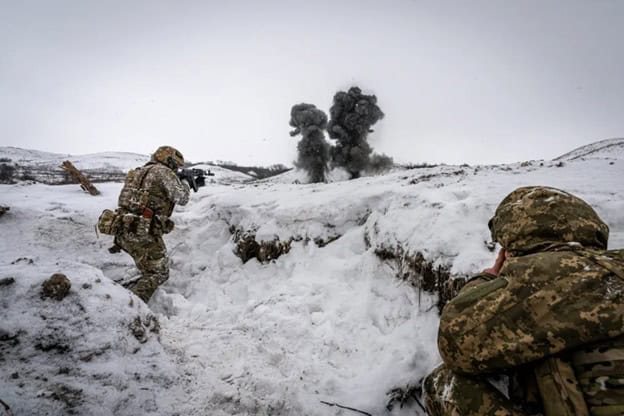
- Foreign Policy: 5 Rules for Superpowers Facing Multiple Conflicts
- The Merge: The Lesson of Tower 22
- The Guardian: New Zealand steps up interest in AUKUS as Pacific security concerns grow
- Bloomberg: US and EU Want Greater Links to Loosen China’s Grip on Critical Minerals
- Washington Post: Global military spending hits record $2.2 trillion amid multiple wars
- Foreign Affairs: Iran’s New Best Friend
- Foreign Policy: How Primed for War Is China?
- Geopolitical Futures: Putin’s Perspective on the Russia-Ukraine War
- Bloomberg: Russia’s Resurgence Shows It’s Often Down but Never Out
- Geopolitical Futures: Europe’s Strategic Moment
Technology & Cyber

- Axios: Biotech is the new focus in U.S.-China tech rivalry
- The Economist: Why America’s controls on sales of AI tech to China are so leaky
- CNBC: China may be making more advanced chips despite U.S. sanctions — but it still faces big problems
- South China Morning Post: OpenAI CEO Altman says UAE could serve as an AI ‘regulatory sandbox’ for the world
- Foreign Affairs: Spying From Space
- The New York Times: How China Built BYD, Its Tesla Killer
- Financial Times: Start-ups worry over EU’s Big Tech crackdown
Cyber Threat Alerts
- VTRAC: Weekly Intelligence Summary – 2/2/2024
- VTRAC: Weekly Intelligence Summary – 2/9/2024
- RISK IQ: GitHub Leveraged by Cybercriminals to Store Stolen Data
- RISK IQ: Kimsuky Group Uses AutoIt to Create Malware (RftRAT, Amadey)
- RISK IQ: Frog4Shell — FritzFrog Botnet Adds One-Days to Its Arsenal
- RISK IQ: ESET Takes Part in Global Operationto Disrupt the Grandoreiro Banking Trojan
- RISK IQ: Mexican Banks and CryptocurrencyPlatforms Targeted With AllaKore RAT
- RISK IQ: Trigona Ransomware Threat ActorUses Mimic Ransomware
U.S. Politics

- Politico: White House to Republicans: Not passing the supplemental helps Iran
UPCOMING EVENTS
- March 13, 2024 – March 15, 2024: Asia-Pacific Maritime (APM)
“It is the largest meeting place for the global maritime value chain where 15,000professionals in Asia including shipowners, shipyards, ship management, technical procurers and end-users will meet with 1,500+ solution providers showcase the latest solutions, services and technology that will drive maritime development in the new decade.” - April 16, 2024: 3rd Annual AGS National Security Conference
- May 7, 2024 – May 9, 2024: Defense Industrial Base Conference (DIBCON)
“DIBCON exists to foster an environment for manufacturers to engage directly with Pentagon leaders and key decisionmakers. We welcome manufacturers of all sizes, whether you are already involved in contracting with the Department of Defense; have been trying unsuccessfully to grow your defense business; or have never considered this huge opportunity.” - July 15, 2024 – July 18, 2024: Republican National Convention
- July 16, 2024 – July 19, 2024: Aspen Security Forum
“The Aspen Security Forum (ASF) is the premier national security and foreign policy conference in the United States. ASF has provided a nonpartisan public venue for domestic and global leaders to discuss the key national security and foreign policy issues of the day for the past 14 years.” - August 19, 2024 – August, 22, 2024: Democratic National Convention
- September 16, 2024: 1st 2024 Presidential Debate
- September 25, 2024 2024 Vice-Presidential Debate
- October 1, 2024: 2nd 2024 Presidential Debate
- October 9, 2024, 3rd 2024 Presidential Debate
- November 22, 2024 – November 24, 2024: Halifax International Security Forum
“Halifax International Security Forum is recognized globally for its cozy and confident convening. Only at Halifax International Security Forum do the entrepreneurs who drive our economies, the writers who challenge and influence the world’s thinking and the decision-makers tasked with tough choices share the stage with the very individuals who are on the ground facing consequential local threats.”