Anthony Ruggiero, AGS Senior Vice President

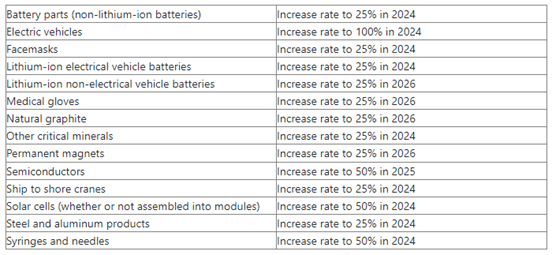
On May 14, 2024,the Biden Administration increased tariffs on Chinese imports on several strategic industries and goods, including battery parts, electric vehicles, semiconductors, solar cells, natural graphite, and steel and aluminum products. The U.S. Trade Representative initiated a review of Trump-era Section 301 tariffs two years ago. The investigation found that “China’s unfair trade practices concerning technology transfer, intellectual property, and innovation are threatening American businesses and workers.” Beijing is also “flooding global markets with artificially low-priced exports.” The administration noted that Secretary of State Antony Blinken, Treasury Secretary Janet Yellen, and Commerce Secretary Gina Raimondo raised these issues during separate trips to China.
Former President Donald Trump criticized the Biden administration’s actions noting that Biden should have acted earlier. Trump also stated that Biden should impose tariffs on “other vehicles” and “other products.” On the campaign trail, Trump has proposed 60% tariffs on Chinese imports and a 10% tariff on imports from other destinations. The former would go further than Biden’s actions on some products, but not as far as others like electric vehicles. The blanket 10% tariff could be used during a second Trump term as an opening negotiating position with countries with a significant trade imbalance or for other purposes like prohibiting the import of Chinese cars from Mexico. Biden criticized this approach claiming it would increase costs for families by an average of$1,500 per year.
The Biden administration’s action marks a significant shift in President Biden’s stance on tariffs as he criticized the Trump administration’s tariffs during the 2020presidential campaign. The deployment of Section 301 tariffs to counter aggressive Chinese economic practices now appears to have broad support across both the Biden and Trump administrations, indicating these policies are likely to be maintained into the next term in 2025, regardless of who wins the presidential election in November.
The tariffs are likely to escalate tensions between Washington and Beijing. China’s Ministry of Commerce condemned the tariffs in a statement, saying that China “firmly opposes this” and called the Biden administration’s decision “typical political manipulation” that would “seriously affect the atmosphere of bilateral cooperation.”
A comprehensive list of impacted goods, the percentage increase, and effective year is available below:
Biden’s remarks from the Rose Garden reinforced that tariffs on China and America’s industrial policies will pay a pivotal role in the U.S. presidential election. Biden used the ceremony to draw a sharp contrast with Trump and responded to the former president’s criticism of Biden’s tariff action. A reporter asked Biden for a response to Trump’s comments that “China is eating our lunch.” Biden responded that Trump has been “feeding them a long time.”
AGS will continue to monitor developments as they occur and provide relevant updates as available.
To stay up to date on what AGS is doing, follow us on LinkedIn