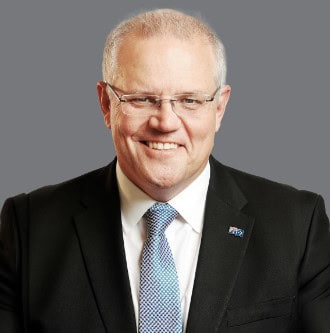
Scott Morrison, AGS Non-Executive Vice Chairman
View from Downunder provides geopolitical insights to AGS clients from an Indo-Pacifc perspective, to assist them navigate the contemporary global geopolitical, security and economic environment. In this edition, I focus on the new Trump Administration, with a focus on the impacts of early economic and global security initiatives both within the US and globally.
Executive Summary
Since President Trump’s inauguration just two months ago, the new Administration has been taking shape, striking a direction and tone far more quickly than occurred under Trump 1.0. A theme of President Trump’s new approach is policy multi-tasking. Tariff policy has been unconventionally used on friends and foes alike not just to rebalance the playing field for trade or to re-industrialise the US economy, but to achieve non-economic objectives such as reducing the flow of fentanyl and illegal immigration on US borders or to lift defence spending and commitments from allies. The President has also used economic, rather than military pressure, to bring Vladimir Putin to the table to end the war in Ukraine, while conjoining US access to critical minerals in Ukraine and leveraging Europe to take greater responsibility for their own regional defence and security, as part of the same peace agreement process.
The Trump Administration’s strategy is to enhance and leverage the strength of the US economy to enshrine and protect US global primacy. In short, it’s about the economy, and they start from a strong position. The US economy remains the largest, strongest and most innovative economy in the world. Forecasts of the US being run down by China have proved to be ambitious and continue to be revised downward, as China faces it’s own domestic economic crisis
While much public attention domestically and politically is directed towards the ideological drivers of spending cuts under DOGE, the fiscal objectives are far more important. With the necessary extension of tax cuts to spur growth the downward revision of revenues by around $4 trillion ( at least) can only increase inflationary pressures, unless growth in public spending can be contained. That said lower energy costs and economic deregulation should mitigate such pressures while enhancing growth.
Finally, there is US tariff policy, the most controversial of the new Administration’s economic measures . The President previously described tariffs as the most beautiful word in the English language. Allies and enemies alike are finding it hard to see the beauty. Where tariffs are being used in a targeted fashion to legitimately reset the playing field on trade and restore US industrial capability eroded during the last thirty years of globalisation, they can produce positive results. However, where applied bluntly, unilaterally and ideologically, they risk collateral damage for trading partners and the US alike. It should also be noted that tariffs are also being used as a revenue substitute for the Budget and a lever to achieve non-economy policy goals by exacting responses, especially from friends and allies, on issues such as border control and defence spending.
We are seeing these same instincts played out once again by the Trump Administration in response to the multiple conflicts the President has inherited. With Israel now dominant in the Gaza conflict, Hezbollah significantly diminished in Lebanon, Assad removed from Syria and Iran pulling back, President Trump, NSA Director Waltz and Secretary of State Rubio, can focus their attention on Ukraine. The Ukraine war has reached a stalemate, with incremental gains achieved only at the price of terrible and continued suffering, too often reversed during the next counter offensive. More of the same in Ukraine is folly. President Trump understands this and is deliberately seeking to disrupt the settings of key relationships and assumptions regarding Ukraine that have prevailed for the past three years, in order to create the circumstances needed for a negotiated, settled and durable peace.
The disruptions underway are obviously affecting stability and certainty in markets and causing tensions in longstanding partnerships and relationships. These impacts have to be mitigated and managed. But it is important to recognise they are being done for a clear purpose. A stronger US economy with a restored industrial base is necessary to maintain a positive world order and is welcome. A stronger US that does not wish to chase monsters and race into foreign conflicts is also welcome, as is expecting US allies and partners to carry their share of the burden when it comes to providing for their own security. It is also important that the US be freed up and supported to direct their efforts to deter the greatest menaces to global peace and security, such as China, and to prevent such tension descending into conflict. These purposes are appealing.
We have entered a season of volatility and recalibration. In such environments there are always opportunities for those who put the effort into understanding the new paradigm, who re-align their strategies and take proper mitigations.
Download the full brief below:
View From Downunder – March 2025
To stay up to date on what AGS is doing, follow us on LinkedIn